


01 Jul Consistency Creates Confidence: The Secret to Reliable Dog Training
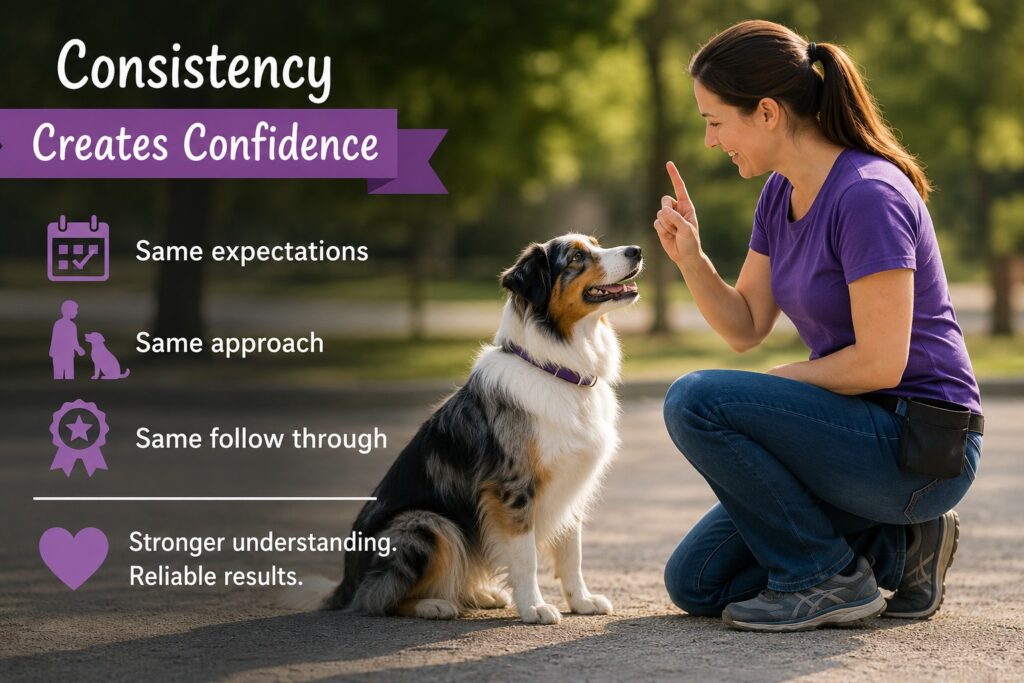
One of the most common questions we hear at Mutt Magic is, “How can I get my dog to listen every time?”
The answer to reliable dog training is surprisingly simple—but not always easy: consistency.
Dogs thrive on clear communication and predictable expectations. While every dog learns at their own pace, the biggest factor in achieving reliable, lasting results isn’t usually intelligence or breed—it’s the consistency of the person holding the leash.
Dogs Learn Through Repetition
Imagine starting a new job where the rules changed every day. One day your supervisor praises you for completing a task a certain way. The next day, you’re told not to do it that way anymore. Before long, you’d probably feel confused, frustrated, and unsure of what was expected.
Dogs experience the same confusion when our expectations change from one day to the next.
If “sit” means “sit until released” on Monday, but “sit until you feel like getting up” on Tuesday, your dog isn’t being stubborn—they’re simply trying to figure out which rules apply today.
The clearer and more predictable we are, the faster our dogs learn.
Consistency Goes Beyond Commands
Being consistent isn’t just about using the same verbal cue. It also includes:
- Rewarding the behaviors you want every time they happen.
- Following through with your expectations.
- Using the same release words and markers.
- Making sure every family member follows the same training plan.
- Practicing skills in different environments to build reliability.
Dogs are incredibly observant. They quickly recognize patterns—and they also notice when those patterns disappear.
Consistency in Technique Matters, Too
One area where we frequently see training stall is when handlers begin changing techniques before giving one method enough time to work.
It’s completely understandable. You may hear advice from a friend, watch a training video online, read a social media post, or receive a well-meaning suggestion at the dog park. Suddenly you’re trying a different leash handling method, changing your reward timing, using a new command, or expecting a behavior to be performed in a completely different way.
The challenge is that your dog is still trying to learn the original lesson.
Imagine having one teacher explain math using one method, only to have another teacher immediately insist on a completely different approach before you’ve mastered the first. The result isn’t usually faster learning—it’s confusion.
This doesn’t mean training plans should never change. Experienced trainers regularly adjust techniques based on a dog’s progress, temperament, or specific challenges. The difference is that these changes are intentional, systematic, and made with a clear understanding of why they’re being made.
Frequently changing techniques simply because something new sounds appealing can unintentionally create setbacks, making it harder for both you and your dog to recognize what is actually working.
Small Inconsistencies Add Up
It’s easy to think that allowing one exception won’t matter.
“Just this once” the dog jumps on a guest.
“Just this once” they pull on the leash because you’re in a hurry.
“Just this once” they sneak onto the couch after you’ve asked them to stay off.
While occasional exceptions won’t erase months of training, repeated inconsistencies create uncertainty. Every time a behavior is rewarded—even unintentionally—it becomes more likely to happen again.
The same is true when we continually change how we teach. Instead of building on previous lessons, we’re often asking our dogs to start over with new rules or expectations.
Over time, these mixed messages can slow progress or even create setbacks that require additional training to overcome.
Setbacks Are Part of the Process
Even the most experienced trainers encounter setbacks.
Life gets busy. Routines change. Vacations happen. New family members arrive. Dogs go through developmental stages, and exciting environments can temporarily make well-learned behaviors seem to disappear.
The important thing is not to become discouraged.
Training isn’t about perfection—it’s about returning to consistency as quickly as possible. Most setbacks can be overcome by revisiting the basics, reinforcing desired behaviors, and giving your dog clear, predictable guidance again.
Training Is a Team Effort
One of the reasons group classes and private lessons are so valuable is that we aren’t just teaching dogs—we’re coaching the people who live with them.
A dog may perform beautifully during class because everyone is following the same training plan. The real success comes when those same habits continue at home, during walks, when visitors arrive, and in everyday life.
If you’re ever unsure whether it’s time to change your approach, ask your trainer before making major adjustments. Sometimes a small tweak is exactly what’s needed. Other times, the fastest path to success is simply remaining consistent with the plan that’s already in place.
The more consistently you practice—and the more consistently you teach—the more confidently your dog responds.
Building Reliable Behaviors
If your goal is a dog who listens at home, in the neighborhood, or even in distracting public settings, consistency should become part of your daily routine.
Keep training sessions short and enjoyable. Practice a little every day instead of cramming everything into one long session each week. Celebrate successes, be patient with mistakes, and remember that every interaction teaches your dog something.
Reliable dogs aren’t created overnight. They’re created through hundreds of small, consistent moments that build trust, understanding, and confidence.
At Mutt Magic, we often remind our Muttmagicians that training doesn’t end when class is over. Every walk, every meal, every greeting at the door, and every game of fetch is another opportunity to reinforce the behaviors you want to see.
When your expectations remain consistent, and your training approach remains steady, your dog can succeed with confidence—and that’s when training truly becomes reliable.
No Comments