


05 Oct Dog Aggression Toward Family & Visitors
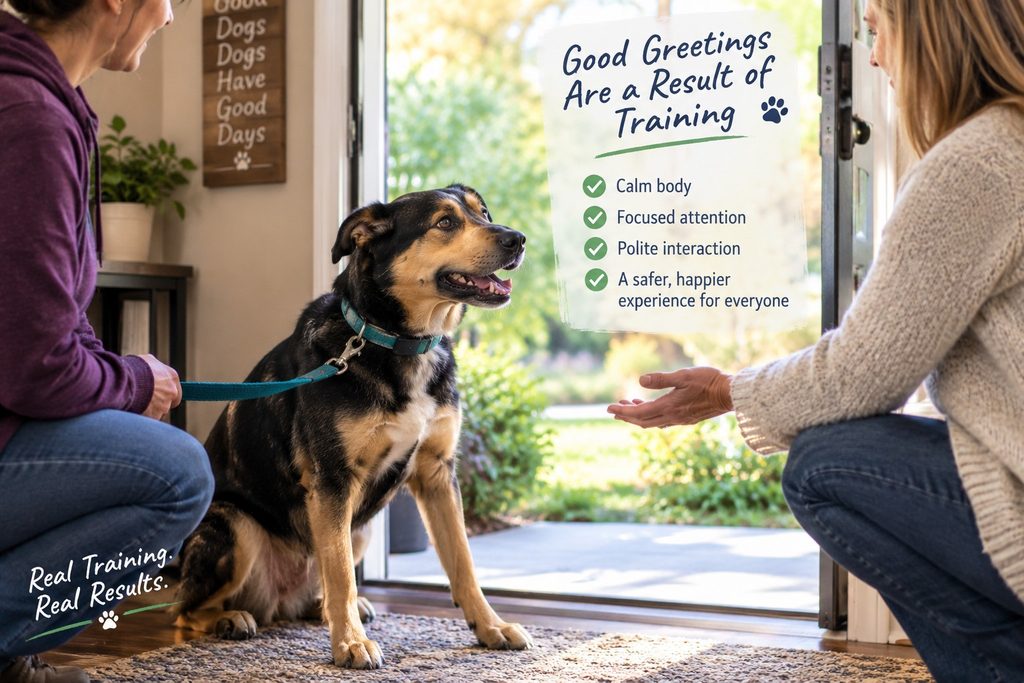
Few things are more unsettling for a dog owner than seeing their dog growl, snap, lunge, or otherwise behave aggressively toward someone they know—or toward a person entering their home.
Dog aggression can leave families wondering: Can I trust my dog? Is someone going to get hurt? What if my dog does this to a child? Does my dog need to be rehomed?
These are understandable concerns. Aggressive behavior should always be taken seriously, but it does not automatically mean that a dog is “bad” or that the situation cannot improve. The first step is understanding why the behavior is happening.
Dogs may react aggressively because they are frightened, uncomfortable, protective of a resource or space, overwhelmed by social interaction, frustrated, or have learned that certain behaviors successfully make people back away. Sometimes several factors are involved.
Example: Think about a dog who barks at the postal worker. The postal worker leaves—and the dog may learn, “My barking made that person go away.”
Of course, the postal worker was going to leave anyway. But the dog doesn’t know that. From the dog’s perspective, barking worked: I barked, and the person left. Something as simple as that “training exercise” can create a problem inadvertently.
Your dog doesn’t owe everyone affection
One of the most important things families and visitors can learn is this:
You do not need to interact with a dog simply because the dog is present. (Unfortunately, “dog people” are bad at this one. . .)
If a dog moves away, avoids eye contact, stiffens, turns their head, hides, growls, or otherwise communicates that they do not want interaction, respect that communication.
This is particularly important with dogs who are uncomfortable around visitors. Asking them to tolerate petting, hugging, reaching over them, or being approached when they are already uncomfortable can increase social pressure rather than helping them become comfortable.
In fact, let the dog initiate affection whenever possible. This is the easiest and most simple way to help prevent dog aggression.
A dog who chooses to approach, remains loose and comfortable, and actively solicits interaction is giving you very different information from a dog who is merely tolerating your presence.
If the dog does not want interaction, the answer isn’t to convince them that they should. Give them space.
Don’t wait for a bite to take dog aggression seriously
Growling and other warning behaviors are valuable information. They tell us that the dog is uncomfortable before the situation necessarily escalates further.
Punishing those warnings can create a dangerous situation in which the dog learns that communicating discomfort doesn’t work. Instead, we want to understand the trigger, manage the environment, and teach the dog appropriate responses.
That is where professional help becomes especially important.
Dog aggression toward family members or visitors is not a behavior problem I recommend trying to solve from a collection of internet tips. Private lessons allow us to evaluate the individual dog, identify the circumstances surrounding the behavior, and create a structured plan for the entire household.
We can work on management, communication, obedience, appropriate boundaries, and controlled exposure while helping everyone understand what the dog is actually communicating.
Most importantly, private training gives you a plan you can consistently use outside of the lesson.
If your dog is showing aggression toward people in your home, don’t wait for the behavior to become more serious before addressing it. The earlier we understand what your dog is trying to communicate, the more effectively we can begin changing the situation.
Your dog doesn’t need to love everyone.
They need to feel safe, understand what is expected of them, and have humans who understand how to communicate with them.
No Comments